
Overview
Estimated time: 2 hours
Language: Spanish
Date: 2026
Format: online, self-paced
Code: RGNPVG1001
Intended for: professionals, students, technical advisors and companies in the agricultural sector looking to incorporate living soil management as a strategic component of agronomic planning and management.
Description:
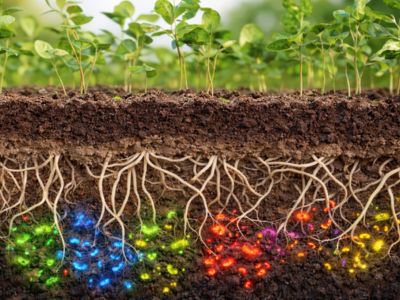
This course addresses the main challenges and opportunities of today’s agriculture through an in-depth understanding of soil as a living system. It explores what a living soil really means, looking at its definition, functions and the importance of its biodiversity, as well as the ecological relationships that keep it working. It delves into key concepts such as the soil–plant–animal–human connection under the “One Health” approach, soil biodiversity and its food web, the ecological succession reflected in the fungi:bacteria ratio, and the role of microorganisms in nutrient cycling through the so-called “microbial bridge”. It also examines the factors that determine soil vitality, such as the impact of chemical fertilization and the importance of organic matter in building healthy production systems. Finally, the course connects theory with practice by introducing the principles of Regenerative Agriculture, with concrete tools for putting them into practice, such as the 5M approach, and methods for monitoring and measuring soil health through the Biological Fertility Index (BFI). The goal is to provide criteria and tools to move towards more resilient, efficient and regenerative production systems.
Learning outcomes:
By the end of this course, you should be able to:
- Understand the concept of living soil and its role in production systems, recognizing the biological and ecological interactions that sustain its fertility and functioning.
- Analyze the ecological processes of the soil, including biodiversity, food webs, nutrient cycles, the fungi:bacteria ratio and the effects of different farming practices on soil health.
- Recognize the principles and tools of Regenerative Agriculture, interpreting soil health indicators and monitoring criteria such as the Biological Fertility Index (BFI) to guide decisions in production systems.